100 Day Project 2021

Showing posts with label architecture. Show all posts

Wednesday, April 24, 2019

Spring at the Old Mill


I have so many favorite places to see in the spring that it's hard to fit them all in, especially with the spring showers we've been having. Well, more than showers . . . downpours! A must see every spring is the Old Mill, but this year I had to dodge the rain and hope the blossoms had not been destroyed. 

A little history of the Old Mill. It is a historic re-creation of an 1880's water-powered grist mill. It's pretty famous. It was used in the opening credits of the 1939 movie "Gone With The Wind."


It's such a beautiful and relaxing place to take a stroll.


No matter what angle you view the mill from, It's breathtaking!


Friends of the Old Mill and the Pulaski County Master Gardeners do an excellent job of keeping it clean and pretty.


Sometimes the water is an icky reddish color, but with all the recent rains it was flowing clear and pretty.


If you look at the foreground of the picture below you can see a concrete bench created by Senor Dionico Rodriquez, a sculptor and artist of Mexico City. There are also concrete sculptures of toadstools, tree stumps, and tree branches entwined to form bridges.


There are some very pretty pathways to stroll along.


I was surprised to see something new at the mill. An unidentified carver had been at work carving an old tree trunk. He carved an amazing replica of the Old Mill and the letters N L R, which stands for North Little Rock where the mill is located in Arkansas.


The Mill has never failed to please in the springtime.
This year it was exceptional!


"The flowers appear on the earth;
the time of the singing of birds is come
and the voice of the turtle is heard in our land."
Song of Solomon 2:12


Saturday, August 12, 2017

On the Lookout


As I travel Arkansas highways
there are certain things that I like to look for
courthouses,
historic buildings,
and
ghost signs.

To find these things it means getting off the main thoroughfare and finding the historic downtown streets. In most Arkansas towns that's not too hard at all. Occasionally Jerry and I take a trip to satisfy my craving for all things old. I'm so grateful on these hot summer days that he's willing to keep the car cool while I hop out and take a few pictures.

I'm not a big fan of modern architecture with it's steel and glass. I love old brick buildings. I love the designs they made by carefully placing bricks. Sometimes I find one really unusual like this pharmacy. I've never seen the pharmaceutical sign made out of bricks.

DeQueen, AR

I like the architecture on top of this building; the curved canopy and parapet which is decorated with brick piers that are topped with rounded concrete caps. It was built around 1902 for the First National Bank of Lewisville. Later it was home to legal offices and title companies. It's know as the King-Whatley Building.


Lewisville, AR


My heart skips a beat or two when I spot old ghost signs, which are advertising signs painted years ago on brick walls. I found several this trip, twenty-eight in only six cities. Among my favorite are the Coca-Cola signs. There's just something nostalgic about Coca-Cola signs. It brings back childhood memories of ice cold glass bottles of Coke on a hot summer afteroon. That was something rare to us. We mostly drank Kool-Aid.

Camden, AR


Sanitary meat anyone? It's a shame someone broke out part of the bricks to insert an air conditioner. Couldn't they find a better place? Like the back maybe?

Stamps, AR


Lewisville, AR


For some reason I vividly remember all the advertising for Dr. Tichenor's formula. Although you can barely read it, the advertisement below is for Dr. Tichenor's which could be bought at Lafayette Drug Company. I got a little curious and googled his name. George Humphrey Tichenor was a Kentucky-born physician who introduced antiseptic surgery while in the service of the Confederate States of America. He was very loyal to the South and would not let his antisepetic be used on soldiers from the North. His medicine consisted of alcohol, oil of peppermint, and arnica. The company is still in existence although the recommended uses are as a mouthwash and topical antiseptic.

Lewisville, AR

Lewisville, AR

My favorite find of this trip was a small library in Ashdown, AR. The public library is housed in what looked to be some type of old garage. Note the large garage door on the left. As you can see they tried very hard to make their library attractive. The murals of popular books were painted on all four sides by artist Art Pelcher. I regret that I didn't take the effort to take better pictures of the library. These where shot out of the car window. I was tired, very tired and very hot. I just couldn't get out of the car again!


Ashdown, AR


This trip was to southwest Arkansas.
Next trip will be to the northeast.
Wonder what I'll find there?

Friday, September 6, 2013

Hot Water!


I’m always wishing we traveled. Mr. H. doesn’t like to travel at all and if I’m totally honest I’m not sure how enjoyable it would be for me anymore since I don’t like strange places, crowds, or planning trips. But, there are days when I do wish I could see the Grand Canyon, the Rocky Mountains, the beach, and so on. To offset those wishes at least once a week I try to get out and visit somewhere nearby. It's kind of fun playing tourist for the day. I went back to the city of my birth and took a day to stroll down the historic streets. I'll tell you right up front there's plenty of facts here, so if you don't like facts about places, you're more than welcome to just scroll through the pictures!
 
I also had another purpose in mind. For my 50mm class with Kim Manley Ort we were to use this lens on a photo walk, try out different distances, blurring backgrounds, and just become more familiar with it. For those of you who don't know a 50mm lens is a fixed lens. You can't zoom out or in. It only has one distance setting. That means in order to zoom one must use their feet; walk closer or back up. It's a little tricky learning this lens. I am forever getting too close to capture what I want and having to back up, carefully watching behind me of course!!
 
(Entrance to the Grand Promenade)
 
I started my walk at the Grand Promenade, a beautiful brick walkway lined with trees, benches, and tables where you can play checkers. I was hoping someone would be there playing, but I guess it was just too hot!


The Promenade, Central Avenue, and the surrounding mountains are all part of Hot Springs National Park in Arkansas. It is the oldest and the smallest national park. In 1832 President Andrew Jackson signed legislation setting aside land for the government to protect. It was orginally called a reservation, not an Indian reservation, but land reserved for the Government. In 1916, congress established the National Park Service system and Hot Springs reservation came under its administration.


What about Hot Springs makes it special? Water! it’s all about the water and the name of the town tells you what kind of water it is...hot water flowing from streams right out of the mountain side!  That's what first attracted people here, and they have been coming here ever since to use the soothing thermal mineral waters to heal and relax.
 
(Ral Spring)
 
The water coming from 47 protected hot springs maintains an average of 143 degrees and flows at about 850,000 gallons per day. If was fascinating on this hot day to see steam rising from this spring as it rushed down the mountain side. I would love to go back on a cold day and see the clouds of steam rising. Better put that on my calendar!
 
(roof of the Quapaw Bathhouse)
 
You can guess what happened when the hot springs were discovered. By 1873 six bathhouses and 24 hotels and boardinghouses had sprung up near the springs. The rich and famous came to the "spa city" to enjoy those hot baths.
 
(bathhouse row)
 
Several devastating fires and floods raged through bathhouse row.  The Victorian bathhouses built were replaced by fire-resistant brick and stucco bathhouses, several of which featured marble walls, billiard rooms, gymnasiums, and stained glass windows.
 
(Fordyce Bath House - 1915)
 
The Buckstaff is the only remaining operational bathhouse within the boundaries of the Hot Springs National Park and has been in continuous service since 1912. I'm pretty crazy about all those blue awnings and the blue chairs on the porch.
 
(Buckstaff Bathhouse - 1912)
 
It's quite a beautiful stroll down Central Avenue. Although many of the buildings stand empty I did see an art gallery in one, but I didn't go in. I wish now that I had. Hot Springs is close only 45 minutes away, so I can make another trip.
 
(bathhouse row - Central Avenue)
 

Along with its Bathhouse Row one of downtown Hot Springs’ most noted landmarks is the Arlington Hotel. The Arlington Hotel has been built three times. The first time was in 1875. It was razed and rebuilt in1893. In 1923, a fire spread, and the hotel burned down. The hotel was built for the third time in 1924. The Arlington was a favored retreat for Al Capone. When he was in town he was know to rent whole floors of the hotel. During the prohibition era, Capone came from Chicago to strike deals with bootleggers in Hot Springs to stock his clubs in Chicago with alcohol. Not only was Hot Springs a remote town located in the middle of the Ouachita mountains, but the pine trees provide "cover" for the moonshine stills year round. Capone would ship his bootleg liquor in tanker railroad cars, and for protection, he had the words "Mountain Valley Water" painted on the side of the railcars! 

(Arlington Hotel - 1924)
 
It’s hard to imagine the city as a hotbed for organized crime, such as gambling, prostitution and bootlegging. But from the late-1800s through the mid-1900s, especially in the 1930s, Hot Springs was a popular hangout for Al Capone, Frank Costello, Bugs Moran, Lucky Luciano, and other infamous mobsters. The safe, secluded scenic location of Hot Springs made it the ideal hideout. I'm pretty sure they had some of the local lawmen in their pockets, too!  One of the gangsters was shot and killed while in Hot Springs. His body was embalmed, placed in an open coffin, and put in the chapel of Gross Funeral Home for people to view as a ghastly reminder that crime does not pay.

My dad was born and raised in Hot Springs, not too far from Central Avenue. He remembers when gangsters would drive through town tossing out quarters, nickels, and dimes to the children along the street. He grabbed himself a few of them!

("Mother Nature" sculpted by Longhua Xu - 1992)
 
Another fact I learned this day was that in the 1900's many professional baseball teams held their training camps at Hot Spring including the Cincinnati Reds, Pittsburgh Pirates, Chicago Cubs, Boston Red Sox, Brooklyn Dodgers, St. Louis Browns, and the Philadelphia Phillies. I imagined they enjoyed those thermal baths to sooth their aching muscles!
 
The building below is interesting. Notice the fancy Victorian look on the front and the rough brick on the side with a cigar ad. Doesn't quite go together does it? Most of the building, not including the bathhouses, have been turned in to little tourist shops.
 

I'm adding this last picture purely for sentimental sake. At the end of Central Avenue, the road splits right and left. In the center of the intersection is this fountain. The fun part is that instead of going right or left, you can drive in a circle around the fountain. I always wanted  my dad to circle the fountain, but he never would. I don't know why he wouldn't do it, but you can be sure that I've driven in a circle around the fountain more than once and laughed when I did.

 
Hope you enjoyed this educational tour of Hot Springs. If you stuck with me till the end, I love you for it!  I'll be back soon showing you some of the people who live and visit there. Yes, I said people, as in people photography!  Not my favorite thing to do!!
 
I need to make a correction regarding my September 2nd post. I mistakenly said that I was taking the 50mm class with Susannah Conway and that just isn't so. I took the class with Kim Manley Ort. My apologies to Kim!


Monday, August 12, 2013

August Break - Day 12


faraway

Looking up the 57 ft. Carillon at Garven Gardens in Hot Springs, AR.

ABfooter3

Thursday, April 25, 2013

Guessing Game


Can you guess where I am?
No?
It's brand new, just opened last week.
Let me show you a few details.

 
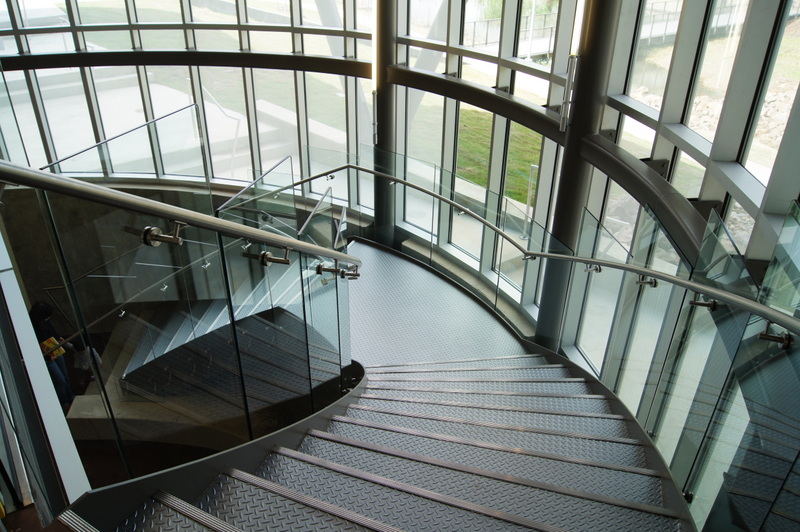
There's a staircase.
Does that help?
Not really, it's a cool staircase with lots of details and textures,
but it could be any were, couldn't  it?
 
This won't help you solve the mystery,
but do you see the little girl with her mother way at the bottom.
She was such a cutie!
All she wanted to do was climb the stairs.
Up and down
Over and over
Her mother patiently held her hand.
 
Here's a few more things I saw.


There's a kitchen and cute little chairs.
Thinking day care?
Nope!
When the structure was built, the design team polled groups of children on what they wanted to learn.
 
“The No. 1 thing was learning how to feed themselves.”
 
That's pretty sad isn't it. So many small children are left at home alone and have to fend for themselves. That information led to the development of a teaching kitchen. The kitchen will offer cooking classes that will help children understand nutrition.
 
Here's another hint.
One of the ways you can get here is by school bus.
 

Thinking school?
Nope!
 
With this peek of the outside, do you see how this slightly resembles a barn? When architect Reese Rowland designed the structure he "drew on childhood memories of dusty sunlight filtering through the slats of his grandparents' barn, winding forest creeks and fortresses made of crates and ladders. These themes of exploration and inspiration informed the building's design."
 
You can wander into one of the rooms and play.
 
 
Community center?
Nope!
 
You can just sit a spell and rest.
There's a chair just your size.
 
 
Haven't figured it out yet?
I'll show you something else you can do there.
 
 
It's such a bright, cheerful place. Susan Gele, assistant director for public relations at Central Arkansas Library System says, “the colors inside are so vibrant and child-friendly that when you come in as an adult, it’s hard to be sad here. It’s hard to be distressed. It’s a hopeful, happy place.”
 And, it is!
I was smiling the whole time I was there.
There are frogs and turtles on the bookshelves and chairs.
There's a caterpillar bench and
rows and rows of books, just kids books.
There are toys, puzzles, games, and
computer terminals for the older ones.
Who wouldn't have fun here??


It's a library especially designed for children.


This is the most wonderful library I've been in!  Most of the children's sections in the other libraries around town are pretty boring. A few computer terminals, stuffed animals thrown around, and maybe a few pictures on the walls. Oh wait, one of our libraries does have some kites hanging from the ceiling. None are as spectacular as this.
 
I hope you enjoyed discovering this place as much as I did. It was fun to capture in pictures; from the small details to the overall picture. There's still more; outside walking trails, ponds, and a greenhouse. If things work out, I'm going to try and post some of those images tomorrow.
 

Saturday, June 16, 2012

Exploring With A Camera ~ Linear Lines

You may not think lines are very exciting, we see them everywhere, but lines have many uses in photography.  We've been exploring linear lines in Kat Eye Studio's Exploring With A Camera and how they effect our photography. 

Multiple lines that come close to one another or converge together is a technique that will lead your eye into a shot, such as the railings on this bridge.

We use lines in photography to lead the eye or draw attention to an object. The lines of the rock walls and pathway lead your eyes to the gazebo, the object of this photo.


Sometimes the leading lines in a photograph are very obvious. The viewer naturally follows the lines to see what is at the end. The interest of this photo is the lush green hillside. The rock wall serves to lead our eyes to the opening and then into the distance.


Leading lines can be solid like the wall, or they can be subtle like these flowers.  The rows of flowers lead your eyes through this photo.


Linear lines can also give us a sense of depth. Our eyes follow the line of grave markers to a distant point. Looking down this row of markers helps you realize the size of this section at the Little Rock National Cemetery.


All linear lines don't have to be straight. They can have curves and still be effective. The orientation of the photo also creates a different look. The first photo was taken horizontally. You feel the expanse of the woods, the quietness, and space and in this case a touch of being alone.


Photographing the same path in a vertical orientation focuses more on the path and the height of the trees.


Viewpoint is also very important when dealing with lines in photography. A different perspective elicits a different response to the photograph. In the images below, looking up creates dramatic image of these buildings. I don't take a lot of architectural images, but I must say this shot of the Saline County Courthouse in Arkansas is my all-time favorite image of a building.  I just love the way my eyes travel up the building to the gorgeous sky.


As I mentioned before, the lines don't have to be straight. The lines of this church steeple lead to the cross at the top.


I hope you'll be seeing linear lines this week!
You don't have to be a photographer to see them!
If you capture some good images of lines,
click on the button below and join the party!!